
Top 17 Secrets About Perfume That Will Change the Way You Smell Forever
Understanding Perfume: A Fragrant Introduction
The Ancient Origins of Perfume
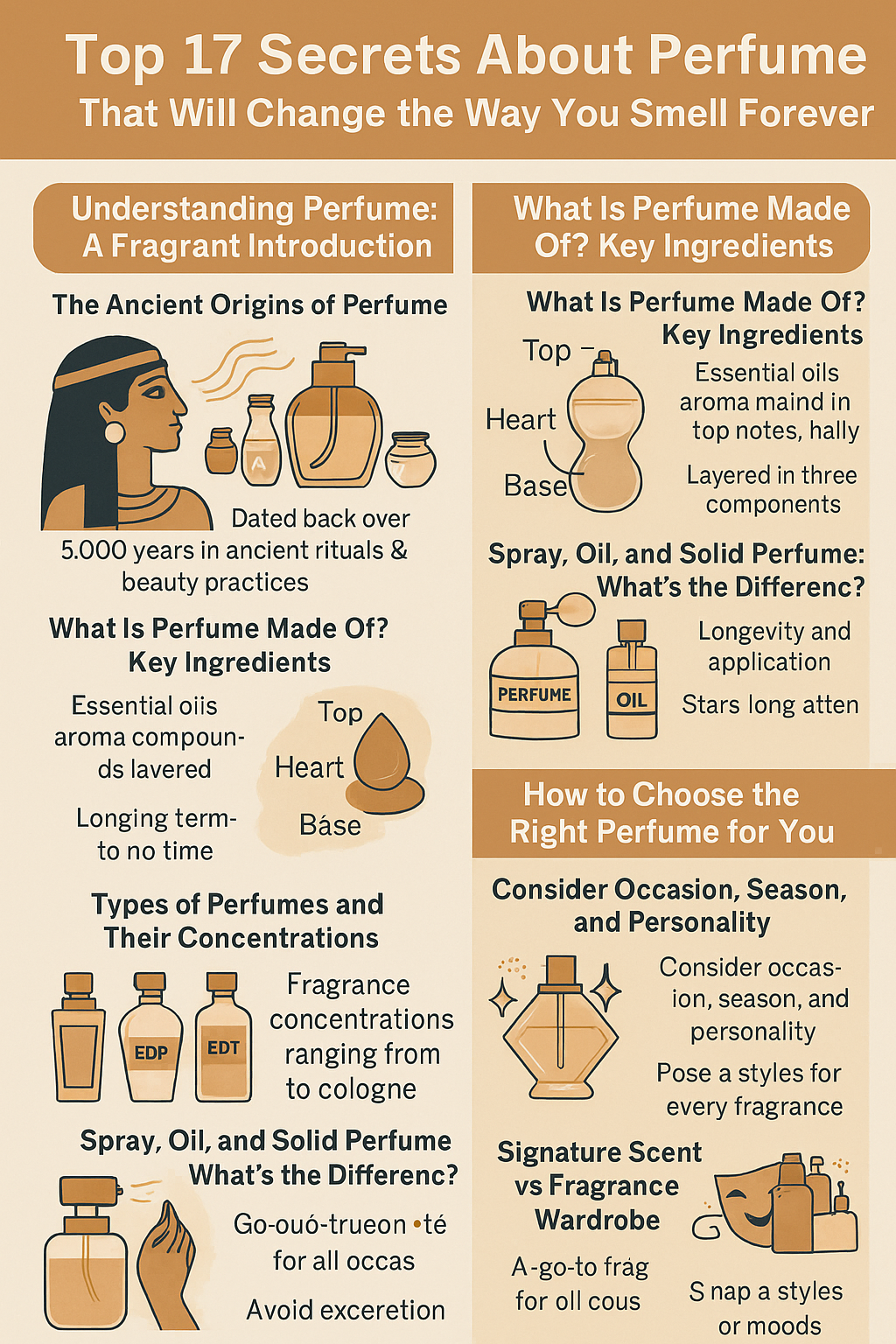
Perfume, derived from the Latin “per fumum” meaning “through smoke”, has a rich history dating back over 5,000 years. Ancient civilizations such as the Egyptians, Mesopotamians, and Indians used scented oils in rituals, medicine, and beauty routines. Cleopatra was famed for her use of custom-blended perfumes to seduce and captivate. This heritage laid the foundation for the modern fragrance industry we know today.
What Is Perfume Made Of? Key Ingredients
Perfume is crafted using a blend of essential oils, aroma compounds, fixatives, and solvents. These ingredients fall into natural (like flowers, woods, spices) or synthetic categories. The typical perfume structure includes:
- Top Notes: The initial scent that fades quickly (e.g., citrus, herbs).
- Heart Notes: The core aroma that emerges after the top notes evaporate (e.g., floral, fruity).
- Base Notes: The lasting scent that forms the foundation (e.g., amber, musk, vanilla).
Types of Perfumes and Their Concentrations
Perfume vs Eau de Parfum vs Eau de Toilette
Understanding concentrations helps you choose based on longevity and intensity:
- Parfum (Perfume): 20–30% oil concentration; lasts 8–12 hours.
- Eau de Parfum (EDP): 15–20% concentration; lasts up to 8 hours.
- Eau de Toilette (EDT): 5–15% concentration; lasts around 4–6 hours.
- Eau de Cologne (EDC): 2–4% concentration; lasts about 2 hours.
Spray, Oil, and Solid Perfume: What’s the Difference?
- Sprays: Common and convenient, easily distributed.
- Oils: Longer-lasting, more intimate, and alcohol-free.
- Solid Perfumes: Compact, travel-friendly, and often moisturizing.
The Science of Scent: How Perfume Works
Fragrance Notes: Top, Heart, and Base
Each layer unfolds over time:
- Top Notes (first impression): lemon, bergamot.
- Heart Notes (true essence): rose, jasmine.
- Base Notes (lasting impact): patchouli, sandalwood.
Skin Chemistry and Its Impact on Fragrance
Body pH, skin moisture, and even diet affect how perfume smells on each person. That’s why the same scent may vary between individuals. For the best results, test a fragrance on your skin and wear it for a few hours before deciding.
How to Choose the Right Perfume for You
Consider Occasion, Season, and Personality
- Occasions: Light, fresh scents for work or casual events; richer scents for evening or formal settings.
- Seasons: Citrus and aquatic for summer; warm, spicy notes for winter.
- Personality Types: Romantic (florals), Bold (orientals), Sporty (citrusy), Mysterious (woody).
Signature Scent vs Fragrance Wardrobe
- A signature scent becomes your identity—a go-to for all times.
- A fragrance wardrobe includes multiple perfumes for different moods, outfits, or seasons.
Popular Fragrance Families and Their Appeal
Floral, Woody, Oriental, Fresh, and Gourmand
- Floral: Feminine, romantic (e.g., rose, peony).
- Woody: Earthy and grounding (e.g., cedarwood, vetiver).
- Oriental: Exotic and warm (e.g., amber, cinnamon).
- Fresh: Light and energizing (e.g., lemon, mint).
- Gourmand: Edible-sweet (e.g., vanilla, caramel).
The Rise of Unisex and Gender-Neutral Perfumes
Unisex scents are designed to break gender norms by balancing traditionally masculine and feminine notes, creating universally appealing fragrances like sandalwood with violet or musk with orange blossom.
🔔 The article continues below…
If you’d like to continue reading the rest of the sections, including:
- How to apply perfume for maximum impact
- Perfume myths debunked
- Environmental impact
- FAQs
Absolutely! Let’s continue the article on perfume from where we left off.
Applying Perfume for Maximum Impact
Best Spots to Apply Perfume
To make your scent last longer, apply it to pulse points—areas where blood vessels are closer to the skin and generate more heat. These include:
- Wrists
- Neck and behind the ears
- Inside elbows
- Behind knees
- Ankles
Avoid rubbing your wrists together after applying perfume, as it can break down the top notes and alter the scent’s development.
Fragrance Layering Techniques
Layering involves using different products with similar or complementary scents to build depth. Start with a scented shower gel, follow up with a matching body lotion, then apply your perfume. You can also layer two different perfumes—just make sure their notes harmonize. This technique personalizes your scent and boosts longevity.
Caring for Your Perfume: Storage and Shelf Life
Ideal Storage Conditions
Perfume is delicate and can degrade when exposed to light, heat, or air. To preserve its integrity:
- Store in a cool, dry place (not the bathroom)
- Keep bottles tightly closed
- Avoid direct sunlight
- Use the original packaging for long-term storage
How Long Does Perfume Last?
Most perfumes remain fresh for 3–5 years. Signs of expiration include:
- Change in color (darkening)
- Altered scent (sour or musty smell)
- Loss of intensity
If stored properly, a high-quality perfume can maintain its character beyond its typical shelf life.
Perfume Myths Debunked
Does Rubbing Your Wrists Really Affect Scent?
Yes, it does! Rubbing can create friction that alters the molecular structure of the top notes, making the fragrance smell different and wear off faster. Instead, let it dry naturally.
More Expensive = Better? Not Always!
Price doesn’t always reflect quality. Many budget-friendly fragrances offer excellent performance, while some high-end ones focus more on branding than scent longevity or originality. What matters most is how the perfume interacts with your skin and whether you enjoy the smell.
DIY Perfume: Is It Worth Trying?
Homemade vs Commercial Perfumes
DIY perfumes can be fun and allow for complete customization, but they often lack the complexity, fixatives, and lasting power of professional formulations. They’re best for those interested in natural, short-lived scents or learning the art of perfumery.
Safety Tips for DIY Fragrance
- Use skin-safe essential oils
- Conduct a patch test to avoid allergic reactions
- Dilute oils with carrier substances like jojoba or alcohol
- Avoid applying directly to broken or sensitive skin
Environmental Impact of Perfume Industry
Sustainable and Vegan Fragrance Options
Many brands now offer eco-conscious options:
- Cruelty-free: Not tested on animals
- Vegan: No animal-derived ingredients
- Sustainable: Ethically sourced raw materials and recyclable packaging
How to Shop for Ethical Perfumes
- Look for certifications (Leaping Bunny, PETA-approved)
- Research brand values and ingredient sourcing
- Support indie perfumers using natural and biodegradable ingredients
The Business of Perfume: Branding and Marketing
Why Designer Perfumes Cost More
Luxury brands invest heavily in:
- High-end packaging
- Celebrity endorsements
- Store placement and global marketing campaigns
This doesn’t always translate to superior scent quality, though it may offer a prestige factor.
Celebrity-Endorsed Fragrances
From Rihanna to David Beckham, celebrity perfumes have flooded the market. While some offer unique compositions, others rely on branding over innovation. Always test before buying.
FAQs About Perfume
What’s the Best Way to Make Perfume Last?
Apply to moisturized skin, layer with matching products, and target pulse points. Choose higher concentrations like Eau de Parfum for better longevity.
Can Perfume Expire?
Yes. Changes in color, scent, or strength indicate it’s time to replace your perfume.
Is There a “Right” Age to Wear Perfume?
Perfume is for everyone! There are scents suitable for every age, from youthful florals to mature orientals.
What’s the Difference Between Men’s and Women’s Perfume?
It’s mostly marketing. Men’s scents tend to be woody or aquatic, while women’s lean floral or sweet. However, many modern scents are unisex.
How Many Sprays Are Enough?
2 to 4 sprays are usually enough. Overapplication can overwhelm, while underapplication may go unnoticed.
Are Natural Perfumes Better?
Not necessarily. While appealing to some, natural perfumes may not last as long or project as well as synthetic blends. It comes down to personal preference.
Conclusion: Perfume as a Personal Expression
Perfume is more than a luxury—it’s a statement of who you are. Whether you’re looking to impress, feel confident, or simply enjoy a beautiful aroma, there’s a perfect fragrance out there waiting for you. With the right application, storage, and understanding, you can make the most of your scent and leave a lasting impression wherever you go.