
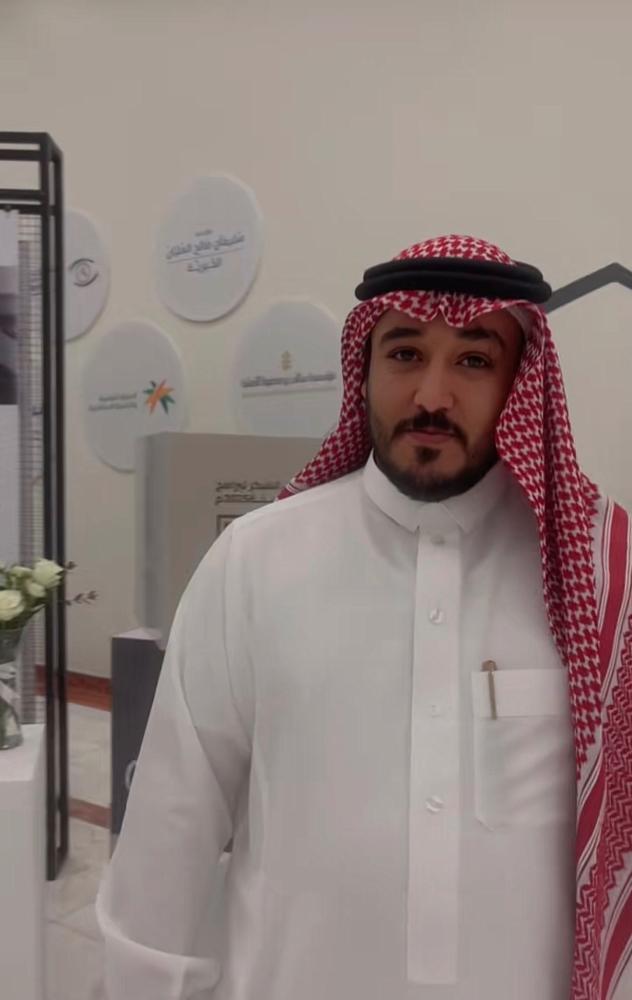
Abdulrahman Al-Sarani: How did you expand from e-commerce to logistics services?
By: Abdulrahman Al-Sarani
the introduction
The move from e-commerce to logistics was not a decision separate from my previous experience, but rather a natural extension of it.
When I started working in e-commerce and establishing Avanti Perfumes , I dealt daily with details that the customer does not see, such as choosing a shipping company, preparing orders, packaging, tracking shipments, dealing with delays, resolving delivery issues, and understanding international shipping requirements.
Over time, I realized that the success of any online store depends not only on product quality or marketing strength, but largely on what happens after the order is completed.
This is where the idea of S&R Express began to take shape.
The idea was not to create a traditional shipping company, but to build a logistics system that helps traders and companies reach their customers efficiently, and supports the growth of businesses from Saudi Arabia to global markets.
Starting with e-commerce
My journey began in the world of e-commerce, where the experience was full of learning and challenges.
Initially, I focused on things that most shop owners focus on:
- Product selection.
- Store design.
- Marketing.
- Advertisements.
- Pricing.
- Customer service.
- Increased sales.
But after actually fulfilling the orders, I discovered that the process does not end when the customer pays for the product.
Instead, a new phase begins that includes:
- Order processing.
- Ensuring the product's safety.
- Appropriate packaging.
- Print the shipping label.
- Handing over the shipment to the carrier.
- Tracking the shipment's movement.
- Addressing the delay.
- Communicating with the customer.
- Returns management.
These details made me understand that logistics is not just an operational step, but an essential part of the customer experience.
The problem that revealed the opportunity
While working in the perfume trade, additional challenges arose, because shipping perfumes internationally is different from shipping regular products.
Many perfumes contain a percentage of alcohol, and therefore may be classified as dangerous goods subject to special requirements in air transport.
This means that shipping it requires a precise understanding of:
- Air freight systems.
- Requirements for hazardous materials.
- Appropriate packaging.
- Commercial documents.
- Customs procedures.
- Requirements of destination countries.
- Taxes and fees.
- Qualified transport companies.
I found that a large number of traders have excellent products, but they do not know how to ship them outside the Kingdom in a professional and safe manner.
The problem was clear:
The demand is there, the product is there, and the customer is there, but the logistics loop is incomplete.
Here, the problem turned into an opportunity.
From an online store to understanding supply chains
E-commerce has helped me understand logistics from the perspective of both the merchant and the customer.
The merchant wants:
- Reasonable shipping cost.
- Speed in execution.
- Clarity in procedures.
- Shipment tracking capability.
- Reducing problems.
- Maintaining the profit margin.
The client wants:
- Fast delivery.
- A sound product.
- Clear information.
- Ongoing updates.
- Easy communication.
- A quick solution when a problem occurs.
This dual understanding was one of the most important foundations that helped me build the S&R Express vision.
I didn't view shipping as simply moving a box from one place to another, but rather as part of the customer's journey and the brand's reputation.
Why was S&R Express founded?
S&R Express was established to provide more integrated logistics solutions for traders and businesses, especially those wishing to expand outside the Kingdom.
The goal was not just to provide a shipping service, but to support the entire business process through:
- Air freight.
- Sea freight.
- Shipping perfumes and hazardous goods.
- customs clearance.
- Import and export.
- Consolidating shipments.
- Repackaging.
- Storage.
- Order fulfillment.
- Door-to-door shipping.
- Comprehensive shipping solutions including fees and taxes where available.
This model helps the trader focus on product development and sales, while the logistics system takes responsibility for getting the goods to the target market.
How did e-commerce help me establish the company?
1. Understanding the needs of traders
Because I dealt with the challenges of e-commerce directly, I knew the problems that a store owner faces.
He is not just looking for a company to transport the shipment, but he needs a partner who understands his business and his goals.
2. Understanding the importance of customer experience
Any delay or damage to the order may affect the store's rating and customer trust.
Therefore, the quality of packaging, speed of follow-up, and clarity of communication have become among the most important elements of the service.
3. Understanding the impact of shipping on profits
Shipping costs may increase the product price and reduce competitiveness.
Therefore, the trader needs solutions that suit the weight, destination, type of goods, and order volume.
4. Understanding the importance of technological systems
Expansion cannot rely solely on manual labor.
Therefore, logistics activities require systems that help to:
- Creating shipments.
- Issuing tracking numbers.
- Customer management.
- Update order statuses.
- Issuing bills of lading.
- Linking online stores.
- Saving documents.
- Preparing reports.
5. Understanding international markets
When the store starts accepting orders from different countries, differences appear in:
- Customs systems.
- Taxes.
- Import requirements.
- Delivery time.
- Documents.
- Product classification.
This requires expertise that goes beyond simply booking a shipment.
Challenges in the transition to logistics services
The transition from e-commerce to logistics was not easy, as the sector requires high accuracy and great responsibility.
Regulations and Licenses
Logistics and customs clearance are linked to official systems and requirements that must be understood and adhered to.
A reliable company cannot be built without knowledge of systematic procedures and continuous information updates.
Risk management
In e-commerce, the problem may be related to a single order.
In logistics, the problem may be related to a complete commercial shipment, an incorrect document, a customs delay, or incomplete requirements.
Therefore, risk management becomes an essential part of the business.
Building a network of partners
Logistics services rely on an integrated network that includes:
- Airlines.
- Transportation companies.
- International agents.
- Customs brokers.
- Warehouses.
- Local carriers.
- Final delivery companies.
Choosing the right partners directly affects the quality of service.
Ongoing customer service
International shipments go through several stages, and the customer may need continuous updates and follow-up.
Therefore, customer service must be able to clarify the status of the shipment, deal with delays, and provide solutions quickly.
Building trust
The customer delivers goods to the company that may be of high value, therefore offering a good price is not enough.
Instead, trust must be built through:
- Clarity.
- Commitment.
- Documentation.
- Accuracy.
- Response speed.
- Preserving the goods.
- Take responsibility.
The relationship between e-commerce and logistics
E-commerce and logistics are two directly interconnected sectors.
Every online sale requires physical execution on the ground.
The store may be excellent, the product strong, and the advertising successful, but if the delivery process fails, the entire customer experience may be affected.
Logistics affects:
- Customer satisfaction.
- Purchase frequency rate.
- Store reviews.
- Returns rate.
- Expansion speed.
- The ability to enter new markets.
- Profit margin.
- Brand reputation.
Therefore, I believe that logistics is not a back department in e-commerce, but rather one of the most important elements of growth.
How does S&R Express support store growth?
S&R Express works to help traders and businesses transform international expansion from a complex idea into a more straightforward process.
This begins with understanding the details of the shipment, such as:
- Product type.
- the weight.
- Number of cartons.
- Destination country.
- Commercial value.
- Nature of use.
- Available documents.
- Customer requirements.
The appropriate logistical solution is then determined in terms of:
- Means of transport.
- Packaging method.
- Regulatory requirements.
- Customs procedures.
- Delivery time.
- Service cost.
- Final delivery.
The goal is to provide a solution that suits the nature of the business, not a single service for all customers.
Lessons I learned from this transition
Start with the problem
The best projects don't start from just wanting to create a company, but from having a real problem that needs solving.
Practical experience reveals opportunities
My work in e-commerce revealed needs to me that I would not have understood through theoretical study alone.
The client needs a comprehensive solution
The fewer entities a customer has to deal with, the easier their experience becomes.
Specialization makes the difference
Focusing on areas such as shipping perfumes and special goods allows for building deeper expertise and more precise service.
Systems are more important than individual effort.
A company that relies on one person cannot expand easily.
A company that builds clear procedures and systems can serve a larger number of customers efficiently.
Reputation is more important than quick profits.
In the logistics sector, a single mistake can lead to a loss of customer trust.
Therefore, credibility and commitment must be the basis of every decision.
My vision for the next stage
I believe that the growth of Saudi e-commerce will increase the need for specialized logistics companies capable of supporting international expansion.
Saudi products have significant opportunities in global markets, particularly in sectors such as:
- Perfumes.
- Dates.
- Saudi coffee.
- Fashion.
- Abayas.
- Heritage products.
- cosmetics.
- Food products.
But accessing those markets requires a system that combines trade, technology, logistics, and customs compliance.
This is the direction S&R Express is working on: building a logistical bridge that helps Saudi products and ambitions reach the world.
Conclusion
My transition from e-commerce to logistics was a natural consequence of my deep understanding of the challenges faced by traders.
I started by selling products, then I learned how to prepare orders, how to ship them, how to cross borders, how to reach the customer, and how each step in this journey can affect the success of the project.
From this experience, a greater vision was formed:
Shipping not only transports goods, but also transports growth opportunities, builds trust, and opens up new markets for businesses.
From Saudi Arabia to the whole world, we convey ambition before we convey goods.